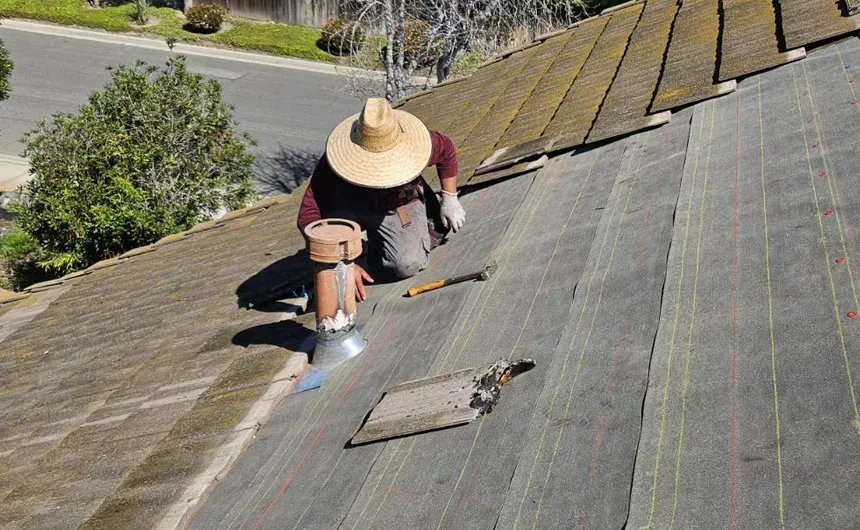
The first heavy rain of the season hits the San Diego area, and suddenly there’s a brown stain spreading across your ceiling. Maybe there’s a slow drip near a window, or a musty smell coming from a room that never had one before. Could your roof be leaking?
Even a small roof leak can allow water to reach insulation, drywall, wood framing, and other parts of your home. And the damage isn’t always visible right away.
Once you’ve addressed the leak, how do you know what needs to be repaired? This guide explains how to recognize hidden water damage, what happens during water damage restoration, and when professional help may be needed to repair and rebuild affected areas of your home.
What Is Water Damage Restoration?
Water damage restoration is the process of cleaning, drying, repairing, and rebuilding areas of a home damaged by unwanted water. The goal is to address the moisture problem and return the affected areas to a safe, usable condition.
You may hear several terms used during this process:
- Water mitigation focuses on limiting further damage, such as stopping incoming water and removing standing water.
- Water remediation involves removing water and addressing moisture or contamination.
- Water damage restoration includes the work needed to restore the property, from drying and cleaning to repairing or replacing damaged materials.
These terms often overlap, but the distinction matters. A home may need professional drying before damaged drywall, insulation, or framing can be repaired.
First, Stop the Leak and Protect Your Home
If you’ve discovered a roof leak, protect your belongings, catch dripping water if it’s safe, and stay away from wet electrical fixtures or sagging ceilings. Contact a roofing professional to locate the source and determine what repairs are needed.
For more detailed instructions, read our guide on What to Do When You Discover a Roof Leak Before Repairs.
Once the leak is addressed, the next concern is finding and repairing any damage the water left behind.
What Can Water Damage Behind Your Ceiling or Walls?
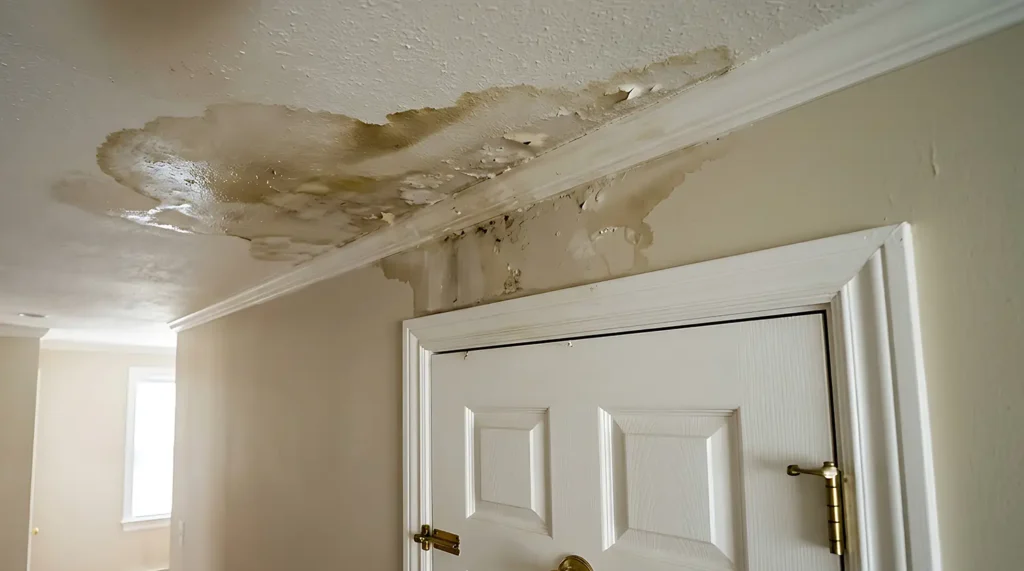
A roof leak can damage more than the surface where a water stain appears. Moisture can soak into drywall, insulation, wood framing, and other materials before homeowners notice a problem.
Signs of possible hidden water damage include:
- Brown or yellow stains on ceilings or walls
- Bubbling, cracking, or peeling paint
- Warped or swollen drywall and trim
- Damp or flattened attic insulation
- Musty odors that don’t go away
- Soft or deteriorating wood
- Visible mold or moisture that keeps returning
- Soft, rotting, or deteriorating wood
Water can also travel along framing and other surfaces before becoming visible. A stain on your ceiling may be several feet away from the actual roof leak.
If a roof leak goes unnoticed for a long time, moisture can also lead to wood rot. Roof decking, and other structural framing materials may begin to decay, weakening the wood. Depending on the extent of the damage, affected wood may need to be repaired or replaced.
When moisture gets trapped inside walls or ceilings, the damage may continue even after the visible surface appears dry. A professional evaluation can help determine which materials have been affected and whether they need to be dried, repaired, or replaced.
Dry Affected Areas and Reduce the Risk of Mold
The Environmental Protection Agency recommends drying water-damaged areas and belongings within 24 to 48 hours to help prevent mold growth. That doesn’t mean mold will always appear within that time, but moisture left in building materials creates conditions where it can develop.
To reduce the risk:
- Remove standing water when it’s safe.
- Dry wet surfaces and belongings as soon as possible.
- Use ventilation, fans, or dehumidifiers when conditions are safe and appropriate.
- Have moisture inside walls, ceilings, or insulation professionally assessed.
- Replace materials that can’t be adequately dried or cleaned.
A dry-looking ceiling doesn’t necessarily mean the materials behind it are dry. Painting over a stain won’t remove trapped moisture, and cleaning visible mold won’t solve an ongoing moisture problem.
Small areas of surface mold may be manageable with proper precautions, but extensive growth, contaminated materials, or hidden mold may require a qualified remediation specialist.
When Does Roof Leak Water Damage Need Professional Help?
Not every roof leak requires extensive restoration. However, professional help may be necessary when water has reached materials that can’t be easily inspected or dried.
Consider calling a professional when:
- Water has entered ceiling or wall cavities.
- Insulation or drywall is soaked.
- Dampness or musty odors persist.
- Mold growth is visible or suspected.
- Water damage keeps returning.
- Electrical wiring or structural components may be affected.
Different parts of the job may require different professionals. A roofing contractor can locate and repair the roof problem, while a water mitigation specialist may be needed to dry affected materials.
Schott Roofing & Construction handles both roof repairs and the construction work needed to rebuild water-damaged areas, including drywall, flooring, framing, and finishes. Once the affected areas are properly dried, our team can help put your home back together.
What Happens During Water Damage Restoration?
Water damage restoration involves assessing the damage, removing unwanted moisture, and repairing or replacing affected materials. The work required depends on how much water entered the home, where it traveled, and how long the materials remained wet.
-
Assess the damage
Professionals identify affected materials, possible safety hazards, and areas where moisture may be trapped. This helps determine what can be saved and what needs replacement. -
Remove standing water
If water has collected inside the home, a water mitigation specialist may use extraction equipment to remove it. -
Dry affected materials
Specialized drying equipment and dehumidifiers may be needed to remove moisture from walls, ceilings, and other areas. Moisture measurements help professionals determine when materials are ready for repairs. -
Clean or remove damaged materials
Some materials can be cleaned and preserved. Others, including badly damaged insulation or drywall, may need replacement. Mold problems may require a qualified remediation specialist. -
Repair the roof
The source of the leak must be corrected to prevent additional water from entering. Roof repairs may happen earlier in the process to protect the home while drying and restoration continue. -
Repair and rebuild damaged areas
Once affected areas are properly dried and any necessary remediation is complete, reconstruction can begin. This may include replacing rotted roof sheathing, repairing damaged rafters or roof trusses, replacing insulation, repairing drywall, restoring flooring, and finishing walls and ceilings.
Schott Roofing & Construction can handle the roof repairs and reconstruction work needed to restore damaged areas of your home.
How Long Does Water Damage Take to Dry?
Drying time depends on the materials involved, how much water they absorbed, and the conditions inside the home.
Surface moisture may disappear quickly, while water trapped in insulation, drywall, or enclosed spaces can take longer to remove. Restoration professionals use moisture measurements rather than appearance alone to determine when materials are sufficiently dry for repairs.
How San Diego's Rainy Season Can Expose Hidden Roof Damage
San Diego may be known for sunshine, but seasonal rainstorms can expose roofing problems that weren’t obvious during dry weather.
Water can enter around aging flashing, roof vents, skylights, or deteriorating roofing materials. Flashing is the metal or other waterproof material used to protect vulnerable joints and transitions in a roof.
Because rain may be separated by long dry periods, homeowners might overlook a small stain until another storm makes the problem noticeable again.
Coastal moisture and marine layer conditions can also affect drying conditions in some homes.
Regular roof maintenance and prompt attention to warning signs can help homeowners catch problems before additional materials are damaged.
Frequently Asked Questions About Roof Leak Water Damage
Does water-damaged drywall always need to be replaced?
No. Drywall may be salvageable after a minor leak if it can be dried thoroughly and hasn’t lost its strength or developed mold. Soft, swollen, deteriorating, or mold-damaged drywall may need replacement. A professional can assess its condition.
Can Water Damage Spread Even After the Roof Leak Stops?
Yes. Water already trapped in insulation, drywall, or wall cavities can continue moving into nearby materials even after the roof stops leaking. If those areas remain damp, deterioration and mold growth can continue.s.Should I Call a Roofer or a Water Damage Restoration Company First?
If water is actively entering through the roof, contact a roofing professional promptly. If water has soaked into ceilings, walls, or insulation, a water mitigation specialist may also be needed. Both problems should be addressed quickly to limit further damage.
Does Homeowners Insurance Cover Water Damage From a Roof Leak?
Coverage depends on your insurance policy, the cause of the leak, and the circumstances surrounding the damage. Sudden events and long-term maintenance problems may be treated differently. Document the damage, review your policy, and contact your insurance company to understand your coverage.
Get Help With Roof Leaks and Water Damage in San Diego
Water damage can be stressful, especially when you’re not sure how far it has spread. Addressing the problem promptly can help protect your home and make the restoration process more manageable.
Schott Roofing & Construction has been helping San Diego County homeowners with their roofing needs since 1969. Whether you’ve noticed a small leak or more extensive water damage, our team can help determine what needs to be repaired.
Contact Schott Roofing for a free roof evaluation or request a free estimate for roof repairs and reconstruction of water-damaged areas.