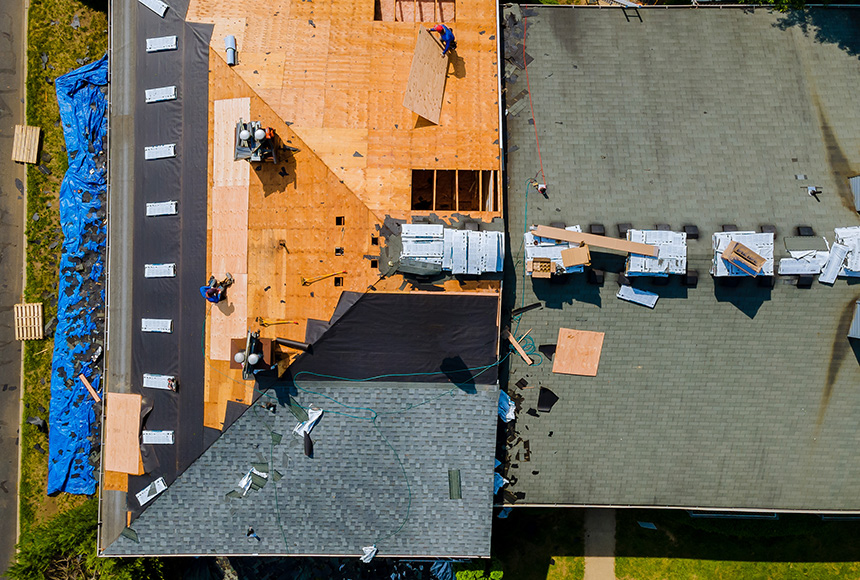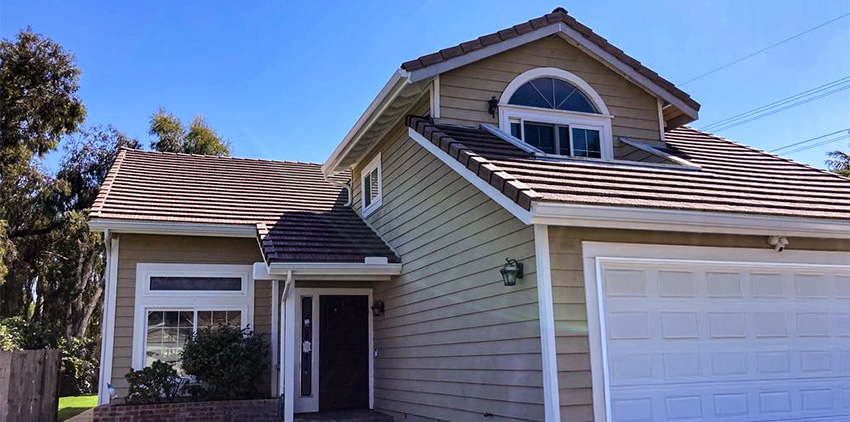
If the tile on your roof still looks good but the material underneath it is aging or damaged, you may wonder whether you really need to replace the entire roof.
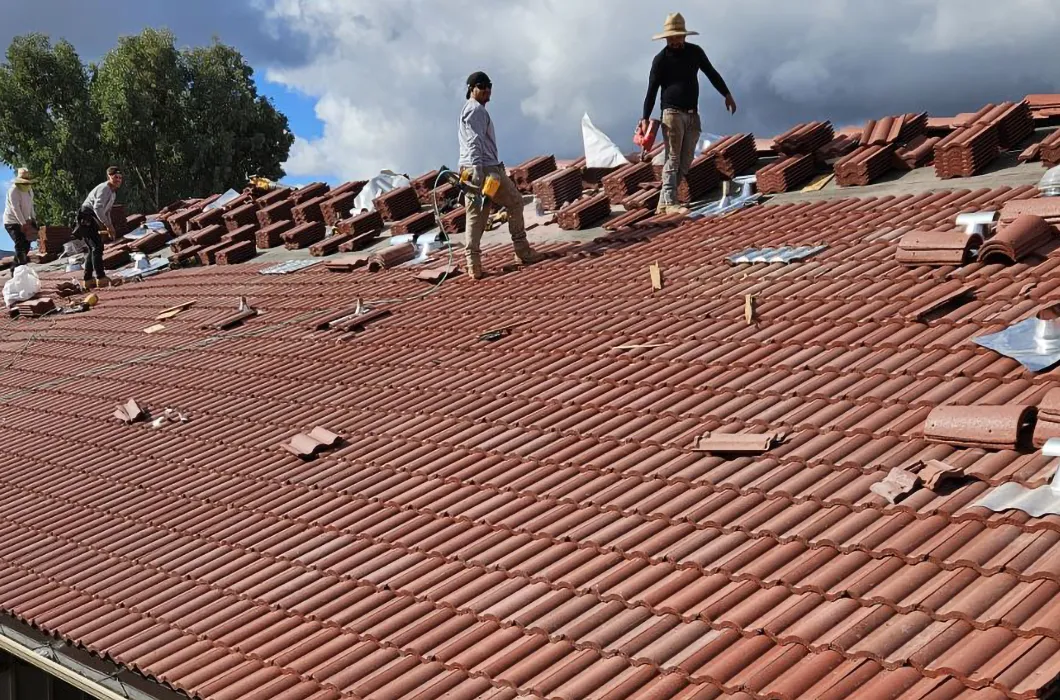
The answer is: sometimes, existing roof tiles can be carefully removed, the underlayment replaced, and the tiles reinstalled. This is often called a lift and re-lay. Whether it makes sense for your roof depends on the condition of the tile, how well it can be removed, whether matching replacement tiles are available, and what is found beneath the tile.
It’s also important to understand what “keeping the existing tile” means. In most cases, the tile is not left in place while new underlayment is somehow installed underneath it. The tiles need to be removed to access the roofing system below.What Is Roof Underlayment on a Tile Roof?
On a tile roofing system, the underlayment is installed over the roof deck and beneath the tile. The tile is the visible surface of the roof and does much of the work of shedding water, while the underlayment provides an important secondary layer of protection against moisture that gets beneath the tile.
That helps explain why a tile roof can look perfectly fine from the ground while a component underneath it needs attention. Clay and concrete tiles can be very durable, and Schott’s broader guide to tile roof replacement in Southern California notes that the components beneath the tiles may wear out before the tiles themselves.
If the underlayment has deteriorated, addressing it may require removing the tile so the roofing contractor can inspect and work on the layers below.
Can Existing Roof Tiles Be Reused?
In some cases, yes.
When the existing tile is still in suitable condition, a contractor may be able to carefully remove it, complete the necessary work beneath it, and reinstall much of the original tile. Tile manufacturer Eagle Roofing describes this type of project as a “lift and re-lay.”
But reusing tile isn’t automatically the right option for every roof. Several factors need to be considered before deciding whether it makes sense.
1. The Condition of the Existing Tile
The first question is whether the existing tiles are worth keeping.
Tiles that are still in good condition may be candidates for reuse. If a roof already has a significant number of cracked, chipped, missing, or otherwise damaged tiles, replacing the roofing material may make more sense.
The condition of the tile also affects how the finished roof will look. If many old tiles need to be replaced with new ones, differences in color caused by age and weathering may be noticeable.
2. Some Tile May Break During the Process
Removing and reinstalling existing tile requires careful handling, but homeowners should understand that some breakage is possible.
Tiles can be damaged as they are lifted or handled, particularly on an older roof. Eagle Roofing notes that removing older tiles can stress them and cause cracks, which means some replacement material may be needed even when the goal is to reuse the existing roof tile.
That doesn’t necessarily rule out a lift and re-lay. It simply means the estimate should account for the possibility that not every tile will make it back onto the roof.
3. Matching Replacement Tile May Be Difficult to Find
Before reusing an older tile roof, it’s also worth considering what happens if replacement tiles are needed.
Roof tile profiles and colors can be discontinued over time. The Tile Roofing Industry Alliance maintains guidance specifically for identifying discontinued roofing tiles, including products from manufacturers that are no longer operating in North America.
Even when a similar tile is available, an exact visual match may be difficult because the existing roof has been exposed to years of sun and weather.
A roofing contractor can evaluate the existing tile and determine whether appropriate replacements are available before work begins.
4. The Roof Beneath the Tile Matters Too
Replacing the underlayment provides access to areas of the roof that normally can’t be fully evaluated while the tile is in place.
Industry installation guidance calls for the roof deck to be checked for decay, damage, delamination, or other conditions that may require repair before underlayment and tile are installed. Flashing and other roofing details are also important parts of the overall water-shedding system.
That means a tile roof underlayment replacement can sometimes uncover additional work that wasn’t visible beforehand.
For example, if damaged roof decking is discovered after the tile and old underlayment are removed, that decking may need to be repaired before the new roofing system can be completed.
5. Findings During the Project Can Change the Scope
A roof estimate is based on what can reasonably be evaluated before work begins. But not every condition beneath an existing tile roof is visible from the surface.
Once the tile is removed, the contractor has a much clearer view of the underlayment, decking, flashing, and other components.
Those findings can affect the scope of the project. This is one reason homeowners should understand how their contractor handles additional work discovered during a roofing project and how any changes will be communicated.
A Schott Project Where the Existing Tile Was Kept
Schott Roofing & Construction has completed projects where retaining existing tile was possible.
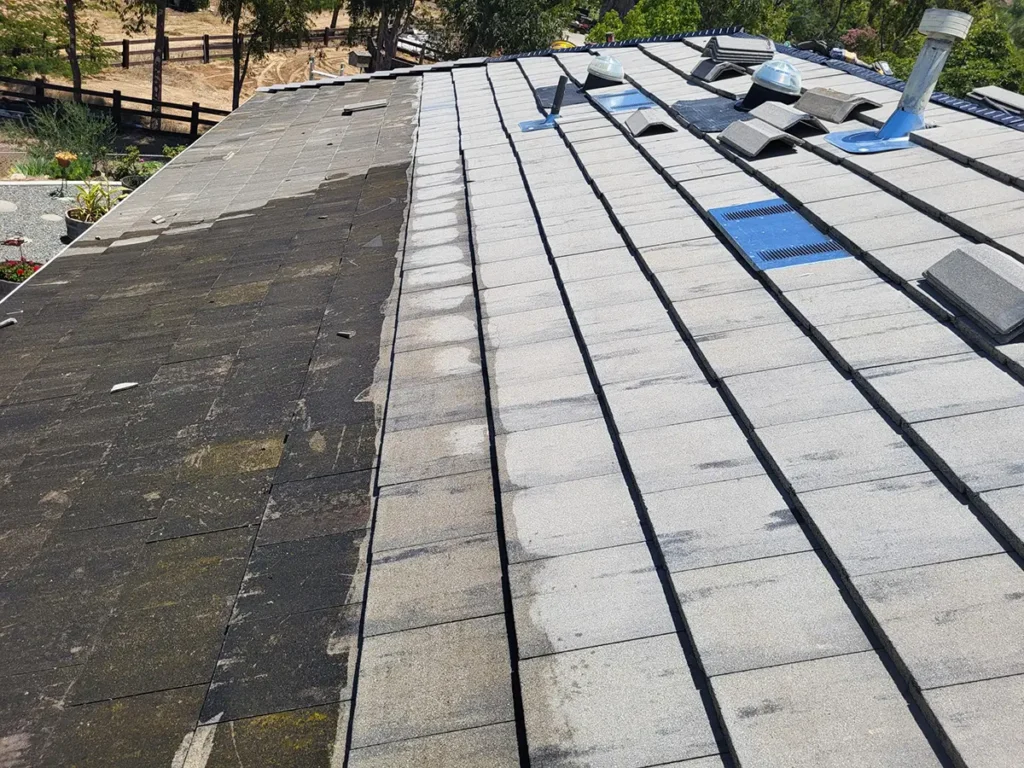
In a recent review, homeowner Yvonne reported that Schott installed new roof underlayment while keeping her existing tiles. She said retaining the tile helped reduce the cost of her project. Her experience is a useful example of what can sometimes be done with an existing tile roof, but every roof is different. The condition and type of tile, the roof underneath it, and the availability of replacement pieces all need to be considered before determining whether tile reuse is practical.
Questions to Ask About a Tile Roof Underlayment Estimate
If you’re comparing options for replacing underlayment on a tile roof, a few practical questions can help you understand what the estimate includes:
- Do you expect my existing tile to be suitable for removal and reinstallation?
- How will broken or damaged tiles be handled?
- Are matching replacement tiles available if some of mine can’t be reused?
- Does the estimate include work on flashing, or will that be evaluated separately?
- What happens if damaged roof decking is discovered after the tile is removed?
- How will I be notified of additional work or costs before they are completed?
A detailed estimate should help you understand both the planned work and what may happen if previously hidden conditions are discovered.
Should You Reuse the Tile or Replace the Roof?
There isn’t one answer that applies to every tile roof.
If the existing tile is in good condition, enough replacement material is available, and the rest of the roof is suitable, removing and reinstalling the tile while replacing the underlayment may be an option worth considering.
On another home, extensive tile damage, unavailable matching material, or conditions discovered beneath the roof could make new tile or a different roofing solution more practical.
The important thing is to evaluate the roof as a complete system rather than judging it only by how the tiles look from the outside.
Schott Roofing & Construction provides residential roofing services throughout North San Diego County, including tile roof repair and replacement. If you’re concerned about an aging tile roof or the condition of the material beneath it, contact Schott Roofing & Construction to request a free estimate and review your options.